
Opinion & Analysis › Economics
OpinionEconomicsAfrican Smallholder Farmers: Work Smart, Not Hard
As family farms lose their next generation, the future of Africa’s food security, rural economies, and wider economic development is at risk. The solution is not simply to persuade young people to return to farming, but to change how agriculture is practiced, organized, financed, and managed.
By P. K. Patnaik · · 6 min read
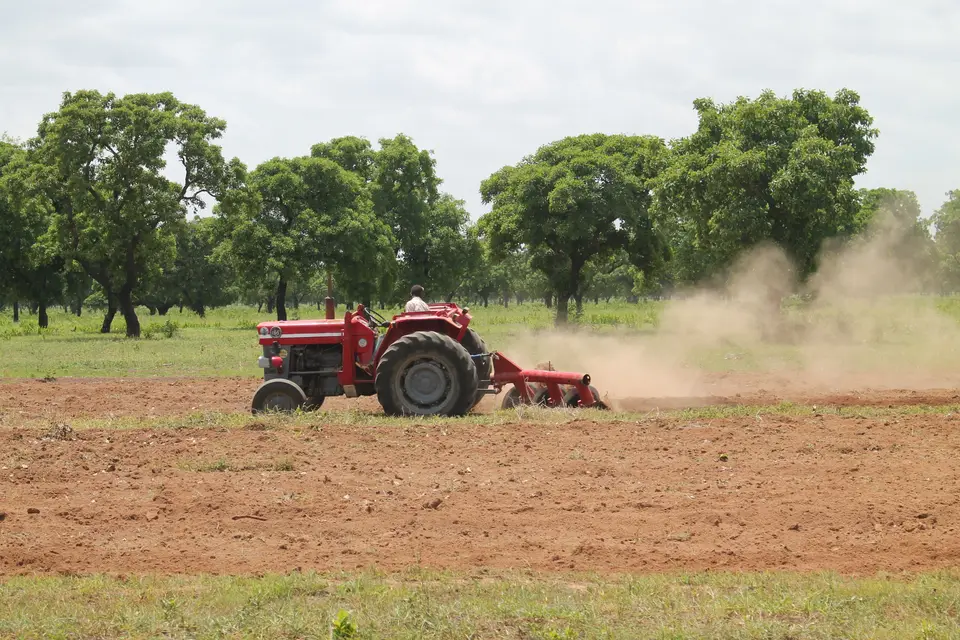
A Generation Leaving the Farm
Across Africa, a worrying trend is emerging: young people are increasingly unwilling to inherit their family farms, preferring to migrate abroad or build careers outside agriculture. As family farms lose their next generation, the future of Africa’s food security, rural economies, and wider economic development is at risk. Depending on the country, agriculture contributes more than 30% of GDP.
Can we blame them? For generations, farming in many developing countries has meant hard physical labor, unpredictable weather, poor market access, low returns, and limited opportunities for advancement. Young people see their parents working long hours without necessarily achieving financial security. Naturally, they aspire to something better.
The Paradox of Untapped Potential
Yet here lies the paradox. Agriculture remains one of the largest economic sectors in many African countries, with enormous, untapped potential. Vast areas of productive land, abundant natural resources, and growing domestic and international markets offer significant opportunities for profitable agribusiness.
According to the Food and Agriculture Organization’s 2022 country profile, Nigeria has about 70.8 million hectares of agricultural land, yet only around 34 million hectares are under cultivation. Tanzania’s Ministry of Agriculture reported that, in 2024, only 11 million of the country’s 44 million hectares of arable land were cultivated. Similar untapped potential exists across the continent.
The problem is not that agriculture lacks opportunities. Rather, superficial and fragmented efforts have failed to transform those opportunities into attractive, profitable businesses for farmers.
The Solution: Work Smart, Not Hard
The solution is not simply to persuade young people to return to farming. We must fundamentally change how agriculture is practiced, organized, financed, and managed. Farming must evolve from a traditional, labor-intensive occupation into a commercially viable, technology-enabled enterprise.
The guiding principle should be simple: work smart, not hard.
Japan’s Lesson: Profitability Is Not About Farm Size
During my visit to Japan in July, I was impressed by how small farmers make a living from remarkably small landholdings. According to Japanese Government statistics, in 2025, the average Japanese farmer operates approximately nine acres (3.7 hectares), often fragmented into several plots in different locations. Yet farmers achieve impressive productivity through intensive cultivation, specialization, mechanization, and disciplined resource management.
Japan offers an important lesson for developing countries, particularly in Africa: owning land, whether a small or large holding, does not automatically make farming profitable. What matters is how intelligently farmers are managing their land, capital, technology, labor, and time.
The objective should not simply be to cultivate more acres or produce more commodities. It should be to maximize economic returns from every acre, every unit of investment, and every hour of labor.
This requires a fundamental shift in thinking—from measuring agricultural success by acreage and production volume to measuring it by productivity, profitability, and return on investment.
Smallholders Need African Business Leaders to Step Forward
Smallholders form the backbone of African agriculture. They produce a significant share of the continent’s food supply and support the livelihoods of most rural households. Despite their hard work, however, their economic performance remains constrained by numerous structural challenges.
Governments alone cannot transform smallholder agriculture. They can create an enabling environment through infrastructure, sound policies, research, education, and access to finance. But transforming smallholder farms into commercially viable enterprises requires entrepreneurial leadership and private-sector investment.
Africa’s successful business leaders and industrialists—including billionaires and millionaires such as Aliko Dangote, Abdulsamad Rabiu, Nick Danso Adjei, Mohammed Dewji, and Said Salim Bakhresa—have the financial resources, business experience, and influence to become catalysts for this transformation.
They should view smallholder agriculture as a significant business opportunity, not merely as an avenue for philanthropy.
There are several practical investment opportunities:
- Affordable agricultural machinery: Manufacture or import appropriately sized tractors, planters, harvesters, and other implements suited to small farms. Equipment-leasing businesses can make mechanization accessible without requiring farmers to purchase expensive machinery.
- Storage and post-harvest infrastructure: Invest in durable metal grain-storage facilities, drying equipment, aggregation centers, and warehouses to reduce post-harvest losses and prevent distress sales.
- Affordable agricultural inputs: Develop efficient distribution networks for quality seeds, fertilizers, and other essential inputs, making them available to farmers at competitive prices.
- Skills and technology: Support practical farmer training, digital literacy, improved production techniques, and access to reliable market and weather information.
- Agricultural value-chain businesses: Invest in input supply, production services, aggregation, processing, transportation, packaging, and marketing.
Most importantly, these investments should be designed around smallholder farmers, rather than simply serving the commercial interests of large agribusinesses.
Small farmers should not remain at the bottom of the value chain, selling raw commodities while others capture most of the value. They must become meaningful participants in value creation through better market access, collective enterprise, processing opportunities, and stronger commercial partnerships.
The opportunity is to build profitable businesses around smallholder agriculture while making smallholder farmers profitable business partners.
Cooperatives: Small Farmers Need Collective Economic Strength
Individual small farmers cannot overcome every economic disadvantage on their own. Fragmented landholdings, limited capital, expensive machinery, weak bargaining power, and inadequate market access put them at a structural disadvantage.
Farmers’ cooperatives can change this equation.
Japan’s experience demonstrates the importance of collective organization, working in collaboration with agribusinesses, to overcome the limitations of small and fragmented farms. Well-managed cooperatives can provide shared machinery, technical advice, quality inputs, storage, processing, digital services, and market access.
By pooling resources and aggregating production, farmers can achieve economies of scale without necessarily consolidating land ownership. They can reduce operating costs, negotiate better prices, meet buyers’ quality and volume requirements, and access services that would otherwise be beyond their individual means.
However, cooperatives must operate as professionally managed business organizations, not merely as administrative extensions of government or social organizations dependent on donor funding.
They need competent management, commercial discipline, transparency, accountability, and a clear business model. A cooperative should be judged by the economic benefits it delivers to its members, not simply by the number of farmers it registers.
Technology Must Replace Drudgery, Not Create More Complexity
Modern agriculture cannot depend indefinitely on backbreaking labor and traditional practices. Appropriately sized machinery, improved seeds, precision farming, digital applications, reliable weather information, and better production planning can dramatically transform how small farms operate.
However, technology adoption must be commercially driven. Farmers do not need expensive gadgets or complicated applications that add little economic value. They need practical, affordable solutions that save time, reduce costs, improve yields, minimize losses, and increase income.
Mechanization should not be viewed as a luxury reserved for large commercial farms. Through cooperatives, equipment leasing, and local machinery-service businesses, even small farmers can access the benefits of modern equipment.
The objective is straightforward: reduce physical drudgery, increase labor productivity, and improve the economic return on every investment.
Farming Must Become a Business, Not Just an Occupation
Perhaps the most important transformation must take place in the smallholder farmer’s mindset.
Farming should be managed as a business. Farmers must understand production costs, market demand, pricing, cash flow, profitability, investment returns, and risk management. They should select crops and production systems based on market opportunities rather than simply continuing to grow what their families have traditionally cultivated.
Production alone does not create prosperity. A farmer can achieve a good harvest and still lose money because of poor timing, inadequate storage, high input costs, weak bargaining power, or limited market access.
Agriculture must therefore become market-oriented rather than production-driven. Farmers need to understand the entire value chain—from input procurement and production to aggregation, storage, processing, and final markets.
The real measure of success is not how much a farmer produces, but how much economic value the farmer retains.
Make Smallholder Farming a Profession of Choice
The future of smallholder farming belongs to those who manage resources intelligently, adopt appropriate technology, organize collectively, understand markets, and operate with an entrepreneurial mindset.
If we want young people to choose farming, we must make farming worth choosing.
They should see agriculture as an opportunity to build profitable enterprises, use modern technology, create employment, and generate wealth—not as an inherited occupation that condemns them to repeat the economic hardships experienced by previous generations.
We do not need another generation of farmers working harder under the same old system. We need a new generation of agricultural entrepreneurs who know how to make the system work for them.
The future farmer must be more than a cultivator of land. He or she must be a manager of resources, an informed market participant, an adopter of technology, and an entrepreneur capable of turning agricultural potential into economic value.
That is the transition we must make: from subsistence to enterprise, from labor-intensive farming to intelligent resource management, and from rural poverty to rural prosperity.
The future of farming is not about working harder to produce more. It is about working smarter to earn more.
Views expressed are the author's own and do not necessarily reflect AfricaFrontPage's.
Have an argument to make? Write for AfricaFrontPage ›