Opinion & Analysis › Economics
OpinionEconomicsAfrica Cannot Secure Itself by Turning Africans Against Africans
Africa is building a continental market while increasingly treating African mobility as a security threat. South Africa's xenophobic crisis exposes a contradiction between economic integration and exclusionary nationalism. As violence, displacement and anti-immigrant sentiment persist into 2026, Africans must rethink security not as borders alone, but as interconnected human and economic futures.
By Dr. Lucy Anning · · 12 min read
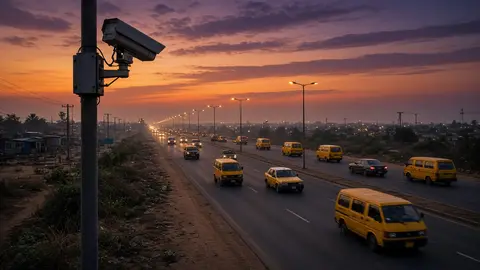
Africa is confronting a dangerous contradiction where a continent pursuing economic integration, regional mobility, shared prosperity and collective security is simultaneously witnessing the securitization of Africans against other Africans. Nowhere is this contradiction more consequential than in South Africa, where migration has become entangled in economic anxiety, political mobilization, national identity and public insecurity.
The tragedy is not that African migrants are unwelcome in certain communities. Instead, Africa's developmental ambitions are being undermined by a security logic that increasingly treats the movement of Africans within Africa as a threat rather than an opportunity. When an African becomes a threat to another African, continental integration begins to collapse at its most fundamental level, that is, the human level.
South Africa embodies this contradiction, for its post-apartheid promise rested on human dignity, constitutional inclusion and liberation solidarity. However, recurring anti-migrant hostility betrays that inheritance by framing African migrants as competitors for jobs, housing, healthcare, business and identity while structural failures that keep producing scarcity escape scrutiny. Consequently, the question is no longer why xenophobia persists, but what damage it does to Africa's developmental future.
The Numbers Tell a Disturbing Story
Xenophobia in South Africa is neither an isolated disturbance nor a peripheral social problem. It is a recurring human-security crisis with economic, political and regional consequences.
Figure 1: Historical Record of Xenophobia
- 708 recorded deaths from xenophobic discrimination since 1994
- 133,366 people displaced (recorded cumulative displacement since 1994)
- 5,710 shops looted (recorded historical cumulative total)
- 1,391 recorded incidents (historical cumulative Xenowatch count)
Sources: Xenowatch, African Centre for Migration & Society, University of the Witwatersrand, 2026.
Beyond the numbers lies a deeper truth, where each death represents a collapse of the most elementary promise of security, each displaced family represents a rupture in livelihoods, education, housing and social stability, and each looted shop represents destroyed entrepreneurial capital, lost employment, interrupted supply chains and diminished confidence in local markets. Africa cannot credibly speak of investment mobilization, entrepreneurship, industrialization and regional value chains while tolerating the destruction of economic assets simply because their owners are African nationals of another country.
Figure 2: Trajectory of Xenophobia from Recurring Outbreaks to Persistent Insecurity
- 2022–2024 (three-year cumulative total): 255 recorded incidents
- 2025 (full year): about 148–151 incidents
- January–June 2026: 50 incidents
Recorded incidents of xenophobic discrimination. Periods are unequal: 2022–2024 is a three-year cumulative total, 2025 is a full year, and 2026 covers only six months.
Source: Xenowatch, 2026
From the above, between 2022 and 2024, Xenowatch documented 255 incidents, 57 deaths, 6,134 displaced people and 810 looted shops. The 2025 record is particularly alarming: approximately 148–151 incidents were recorded, depending on the publication and reporting update. That discrepancy is a reminder that verified datasets can be updated as incidents are reviewed, rather than a reason to obscure the underlying trend.
For January to June 2026, the updated Xenowatch factsheet records 50 incidents, 9 deaths, 4,104 displaced persons and 34 shops looted. Displacement alone is particularly striking, as more than 4,100 people were displaced in six months, compared with 300 recorded during the entirety of 2025 in that dataset.
The violence is changing in its developmental significance, because it is no longer adequately understood through episodic eruptions of street violence alone. It increasingly involves the disruption of residential security, commercial activity, access to public services, livelihoods and the authority of the state. The underlying issue is the frequency of violence and the normalization of exclusion as a method of governing economic and social frustration.
The Economics of Blaming the Outsider
There is a political convenience in blaming migrants for problems that predate their arrival. An unemployed young person is told that a foreigner has taken his job. A community without adequate healthcare is told that migrants are overcrowding hospitals. A neighbourhood struggling with crime is told that its insecurity is imported. A small trader facing declining purchasing power is persuaded that the foreign-owned shop is the enemy, and this clearly shows how economic frustration acquires a nationality.
Nonetheless, South Africa's economic grievances are real given the high rates of unemployment, inequality, poverty, inadequate municipal services, housing shortages and distrust of political institutions which have created a combustible social environment. However, the presence of genuine grievances does not validate the attribution of blame; it merely makes scapegoating politically profitable. The most revealing evidence is not that anti-migrant sentiment exists, but that it is increasingly measurable, as illustrated in the figure below.
Figure 3: South African Public Attitudes Towards Immigrants
- Share who would welcome all immigrants: 24% in 2020, 15% in 2025
- Share who would welcome no immigrants: 28% in 2020, 42% in 2025
Source: HSRC, 2026. South African public attitudes towards immigrants, 2020–2025. Selected endpoints from the HSRC's South African Social Attitudes Survey (SASAS)
From the diagram above, the data from the Human Sciences Research Council (HSRC) shows the proportion of South Africans who said they would welcome all immigrants declined from 24% in 2020 to only 15% in 2025. Over the same period, those who said they would welcome no immigrants rose from 28% to 42%. Meanwhile, 77% of respondents in 2025 believed immigrants increased crime rates, 13 percentage points above the 2018 level.
The implication is profound: anti-immigrant hostility is not an expression of momentary frustration, but is becoming embedded in public attitudes.
Afrobarometer's January 2026 South Africa findings sharpen the warning, as nearly seven in ten respondents (69%) perceived immigration as economically negative. Eighty-three percent wanted the government to reduce or eliminate foreign job seekers, including 51% who preferred a reduction and 32% who favoured eliminating such entry altogether. Only 40% supported free movement across Southern African borders for trade and work.
Figure 4: South Africa's Migration Attitudes, 2025–2026
- 69% see immigrants as economically negative
- 83% want the government to reduce or eliminate foreign job seekers
- 40% support free movement across Southern African borders for trade and work
- 50% would like or would not mind living next door to immigrants
Source: Afrobarometer South Africa, January 2026.
These findings expose a contradiction at the heart of South African political economy where citizens are increasingly willing to reject immigration while the country itself remains dependent on regional economic interconnectedness, migrant labour, cross-border trade and transnational business networks.
The foreigner is simultaneously embedded in the economy and excluded from the imagined national economy, and this is exactly where xenophobia becomes a development problem. It distorts the diagnosis of economic hardship, displaces accountability from public institutions, discourages investment in communities exposed to instability and destroys the possibility of building regional production networks based on trust.
An economy cannot industrialize through hostility, nor can a country resolve structural unemployment by converting vulnerable populations into convenient economic scapegoats.
Africa's Integration Paradox: Open Borders in Theory, Closed Societies in Practice
The South African crisis is a national expression of a wider continental dilemma. In August 2026, Afrobarometer released findings from 50,961 interviews across 38 African countries, revealing a striking contradiction in public attitudes towards migration.
Figure 5: Continental Attitudes Towards Migration, Afrobarometer 2026
- 56% support free movement within their region
- 64% want fewer or no foreign job seekers admitted
- 77% would welcome or not mind immigrant neighbours
- 44% believe immigrants have a negative economic impact
Source: Afrobarometer, 2026
Africa appears culturally more welcoming than its migration policies suggest. The data above suggest that three-quarters of respondents would accept immigrant neighbours, yet majorities support restrictions on foreign job seekers and refugees. The continent is therefore not rejecting foreigners but really struggling to reconcile human openness with economic insecurity, institutional mistrust and political competition.
The political challenge is not necessarily to persuade Africans to abandon legitimate concerns about employment, services or border administration but to construct institutions capable of managing these concerns without turning national protection into continental exclusion.
The African Continental Free Trade Area (AfCFTA) cannot thrive as an economic architecture disconnected from the realities of human mobility. Trade corridors require workers. Regional value chains require technicians, traders, entrepreneurs and logistics professionals. Industrial clusters require labour markets that can respond to opportunity across borders. Small businesses require customers, suppliers, transport networks and predictable regulatory environments.
The AfCFTA's ambition to create a more integrated continental market is fundamentally weakened when Africans can move goods more readily in principle than they can move themselves in practice.
The continental contradiction lies in the fact that Africa is attempting to build a market without adequately building trust in the people who constitute that market. Africans are negotiating tariff schedules while communities negotiate who deserves to belong or benefit. We are celebrating regional integration while tolerating the fragmentation of social relations. We are promoting African competitiveness while allowing African entrepreneurs to become targets of African hostility. This is integration without a social contract.
The Global Security Initiative: A Different Grammar of Security
Africa has traditionally approached security through military preparedness, border enforcement, conflict management, counterterrorism and state sovereignty. These instruments remain indispensable. But migration-related insecurity exposes the limitations of frameworks that treat the state as secure even when the people within and around it are becoming increasingly insecure.
The Global Security Initiative (GSI), a set of security principles first put forward by China in 2022, offers a useful intellectual framework for this discourse. Its framework emphasizes common, comprehensive, cooperative and sustainable security—recognizing that security is interconnected, legitimate concerns require attention, disputes should be addressed through dialogue, and that development is essential to removing the conditions that reproduce insecurity. The GSI is no magic formula, nor should Africa outsource its security philosophy to an external power. However, its value lies in the questions it invites African policymakers to ask: can South Africans be secure while migrants live in constant fear of assault, eviction, extortion or arbitrary exclusion? Can border control alone address unemployment, urban precarity, corruption, institutional mistrust and community conflict? Can neighbouring states jointly manage migration, documentation, labour markets and policing rather than shifting costs onto one another? Can governments suppress violence temporarily without confronting the conditions that make xenophobic mobilization politically reusable? These questions challenge the assumption that exclusion is synonymous with security. A border can be tightly controlled while a community remains unstable. A migrant can be deported while unemployment persists. A shop can be looted while the structural conditions of poverty remain intact. Security that merely relocates insecurity is not security—it is displacement of the problem.
The GSI's strongest potential contribution to Africa is its insistence, at least conceptually, that security must be collective, connected and developmental. This principle is compatible with African priorities when translated into African institutions, African policy ownership and African accountability. This indicates that the migrant is not the development problem; the development failure is.
There is an uncomfortable truth that African governments must confront: it is politically easier to police the movement of poor people than to reform the institutions that keep them poor. Migration becomes the visible crisis while structural inequality becomes the invisible one. African governments must understand that a foreign trader is easier to identify than a dysfunctional local economic system, an undocumented worker is easier to mobilize against than a failed employment strategy while a migrant-owned shop is easier to attack than the policies, financial barriers and market structures that prevent local entrepreneurs from thriving. Inasmuch as scapegoating is an economic illusion, it offers the emotional satisfaction of identifying an enemy without the intellectual discipline of solving a problem. The developmental question should therefore be reframed as "what kind of African economy makes the arrival of another African appear threatening rather than economically complementary?" A continent of 1.4 billion-plus people should not be trapped in a politics of scarcity that makes its own demographic scale appear dangerous. Africa's population is an enormous productive, entrepreneurial, technological and consumption asset. But demographic potential without productive capacity becomes pressure. Mobility without governance becomes anxiety. Integration without inclusion becomes competition.
Five Imperatives for a Development-Centred Migration Strategy
1. Convert economic anxiety into productive capacity
Youth employment policy must move beyond temporary relief and political promises in a bid to expand labour-intensive industrialization, vocational training, agricultural processing, construction, logistics, digital services and entrepreneurship. Where employment opportunities expand, political mobilization around perceived migrant competition has less fertile ground.
2. Make migration governance visible, credible and lawful
Modernize documentation, work permits, border systems, asylum processing and labour inspection. This works by way of improving local government capacity to plan housing, healthcare, sanitation and service delivery according to actual population needs. Administrative invisibility breeds misinformation; institutional incapacity breeds resentment.
3. Protect African enterprise rather than nationalizing resentment
Support both local and migrant entrepreneurs through access to finance, formalization, business registration, markets, digital payment systems and fair competition. Protect businesses from extortion, illegal levies, looting and discriminatory enforcement. Economic opportunity should be widened, not redistributed through intimidation.
4. Make continental cooperation operational
The African Union (AU), the Southern African Development Community (SADC) and national governments are encouraged to move beyond declarations on free movement—establishing shared migration data, cross-border labour agreements, mutual skills recognition, interoperable documentation, migrant-worker protections and joint anti-trafficking operations. Cooperation must deliver tangible benefits to border communities.
5. Treat xenophobic mobilization as a rule-of-law and human-security issue
Governments must investigate attacks, prosecute perpetrators, protect victims and hold officials accountable when they facilitate or tolerate unlawful exclusion. Community dialogue further needs to be paired with enforcement. Without consequences, anti-migrant vigilantism risks becoming an informal authority competing with the state.
These imperatives must be pursued simultaneously. Security without development is coercive and fragile. Development without security is vulnerable to disruption. Integration without governance is politically unsustainable. Governance without legitimacy is increasingly contested. The objective is not a borderless Africa overnight but an Africa in which borders are managed without becoming instruments of hatred, and migration is governed without sacrificing dignity.
The Cost of a Divided Africa
Every lynching is a message to every investor across the continent and beyond. Xenophobia carries consequences far beyond the immediate victims, by signalling to regional investors, entrepreneurs, workers, students, tourism operators and trading communities that economic participation may be conditional on nationality, political mood or community acceptance, and that uncertainty has a price. Investment requires predictable institutions, businesses require secure property, labour markets require mobility and the matching of skills to opportunity, and regional supply chains require the confidence that people, goods and services can cross borders without arbitrary disruption. When violence becomes an instrument of economic grievance, these foundations weaken. South Africa then risks losing its reputation as a continental economic anchor, and the very strategic advantage of being a gateway to Africa's wider markets, while the rest of the continent risks learning the wrong lesson: that development can be pursued by narrowing belonging rather than widening opportunity. The danger is a continental domino effect in which each country responds to the exclusion of its nationals elsewhere with increasingly restrictive policies of its own, leaving Africans trapped in a cycle of retaliatory nationalism, shrinking mobility, diplomatic resentment and fragmented regional economic relations. That is precisely the opposite of what Africa needs in an era of global competition for capital, critical minerals, manufacturing capacity, technological influence and strategic partnerships, for a continent negotiating from fragmentation bargains from a position of weakness.
Africa's Security Must Begin with the African
Africa's security must begin with the African, for the GSI offers a useful conceptual proposition that security is not sustainable when pursued at the expense of others, and Africa can adapt this principle without surrendering strategic autonomy or importing a geopolitical template wholesale. The continent therefore requires an African doctrine of security interdependence that recognizes the citizen, the migrant, the trader, the worker, the host community and the state as interconnected rather than competing priorities, and this doctrine must move beyond sentimental Pan-Africanism.
Africa does not need to choose between protecting its citizens and protecting migrants. It only needs institutions capable of doing both. Essentially, the true measure of African development is not how effectively a nation keeps another African outside its borders, but how effectively it creates a society where opportunity, dignity and security are no longer competing propositions. A continent that fears its own people cannot mobilize its own potential, and a continent that turns mobility into menace will struggle to turn integration into prosperity. The African migrant is not the enemy of African development; the enemy is an architecture that manufactures scarcity and mistakes exclusion for progress. Africa's future will never be secured by making Africans strangers to one another. It will be secured only when the safety of one African is understood as inseparable from the dignity, opportunity and security of another.
Views expressed are the author's own and do not necessarily reflect AfricaFrontPage's.
Have an argument to make? Write for AfricaFrontPage ›