The Cavalry Is Not Coming
They want you to believe Africa is poor. It is not. It is being managed to stay poor. Sixty-three years after Kwame Nkrumah warned a room in Addis Ababa to unite or perish, cavalry is not coming.
By Joseph A. Sampson · · 5 min read
They want you to believe Africa is poor. It is not. It is being managed to stay poor.
For sixty years the story has not changed, only the savior's name. First it was the British and French with their aid ministries. Then the World Bank and the International Monetary Fund (IMF) with their structural adjustment. Then Bono and the non-governmental organisations (NGOs). Then Beijing with the railways. Then it was John Kerry with climate finance. Now it is Brussels with "critical raw materials partnerships."
Every single time, the deal is the same: You keep the raw materials, we keep the factories. You keep the poverty, we keep the price.
And our leaders keep lining up for it.
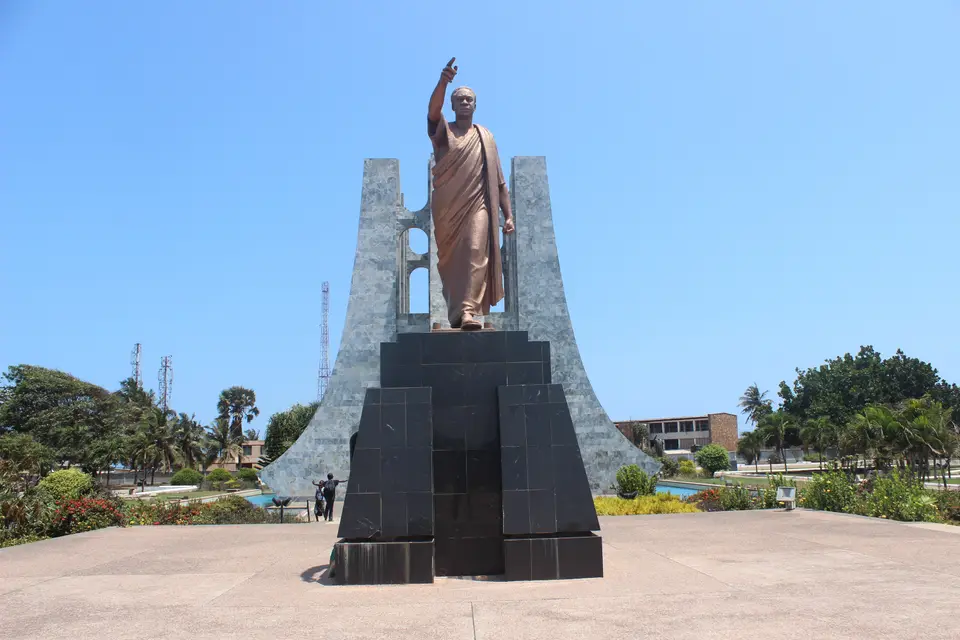
If you want to understand why, go back to one day in Addis Ababa. May 24, 1963. Kwame Nkrumah, Ghana's president, walks into a room of leaders from 32 independent states, most of them newly independent, who are enjoying the perks of their new flags and anthems, and he tells them the party is over.
"Our objective is African union now. There is no time to waste. We must unite now or perish."
They did not listen. They never do when the truth is uncomfortable.
Nkrumah saw what they refused to see. That independence was fake if you could not control your economy. He said it plainly that day:
"Independence is only the prelude to a new and more involved struggle for the right to conduct our own economic and social affairs; to construct our society according to our aspirations, unhampered by crushing and humiliating neo-colonialist controls and interference."
Think about that line. 1963. He is describing exactly what is happening in Ghana, in Zambia, in Congo today. Your budget is still reviewed in Washington. Your mine is owned in Toronto. The currency of 14 countries is still literally printed in France.
He warned them they were about to become Latin America. That was his exact warning:
"We have already reached the stage where we must unite or sink into that condition which had made Latin-America the unwilling and distressed prey of imperialism after one-and-a-half centuries of political independence."
That is exactly what happened. We sank.
Why? Because Nkrumah demanded something dangerous. He did not want a club. The other heads of state wanted a gentlemen's club where no one criticizes anyone's coups - that became the Organisation of African Unity (OAU). Nkrumah wanted a real country.
"Unite we must. Without necessarily sacrificing our sovereignties, big or small, we can here and now forge a political union based on Defense, Foreign Affairs and Diplomacy, and a Common Citizenship, an African Currency, an African Monetary Zone and an African Central Bank."
An African currency. An African central bank. An African High Command. Imagine that. The Central Intelligence Agency (CIA) and the Quai d'Orsay did not want that. The Monrovia bloc killed it, gave us a weak charter, and Washington and Paris breathed easy.
And Nkrumah told them why it mattered, in lines that should be on every finance ministry wall in Africa:
"Yet all the stock exchanges in the world are preoccupied with Africa's gold, diamonds, uranium, platinum, copper and iron ores. ... We have been too busy nursing our separate states to understand fully the basic need of our union, rooted in common purpose, common planning and common endeavour."
That is the entire game. Wall Street and the City of London and Shanghai are preoccupied with what is under our soil. And we are preoccupied with our separate, tiny, competing states, begging for a better price for the same raw rock.
Nothing has changed. It is just lithium now. Cobalt. Graphite. The critical minerals for their Tesla transition. They come to Kinshasa and Lusaka and say "we want to partner for your green transition." Translation: We want your cobalt, but we would rather make the battery ourselves.
So we still export raw lithium and import batteries. We grow most of the world's cocoa and import chocolate. We pump crude and, the Dangote refinery aside, import petrol. 54 markets. 42 currencies. 16 landlocked countries, some paying up to 40 per cent of the value of their goods just to reach a port. This is not an accident. A continent this fragmented is easy to buy.
Nkrumah understood that one small country trying to be self-sufficient would be crushed. That is what happened to Nyerere's Ujamaa. That is what happened to Sankara when he said Burkinabes would wear Burkinabe cloth and consume what Burkinabes produce. They were strangled because, as Nkrumah said:
"Not one of us working singly and individually can successfully attain the fullest development. ... Only a united Africa functioning under a Union Government can forcefully mobilize the material and moral resources of our separate countries ..."
That is the part they do not teach you at the donor workshops.
So here we are, 63 years later, and the new cavalry has the same face. Climate finance that never arrives. African Continental Free Trade Area (AfCFTA) launch events with no roads to move the goods. A Pan-African Payment and Settlement System (PAPSS) that too many of our central banks and commercial banks are still slow to use.
But Nkrumah's other line is still true, and it is the only optimistic line left:
"We shall no longer be dependent upon aid from restricted sources. We shall have the world to choose from."
That is not isolationism. That is power. That is what a united Africa with its own currency and its own army and its own industrial plan could do. It could look at America, China, Europe, and Russia and say: You want to trade? Fine. On our terms. Build the factory here.
No one is going to give us that. As Nkrumah said in that same speech:
"We have been charged with this sacred task by our own people, and we cannot betray their trust by failing them."
They betrayed that trust in Addis Ababa in 1963. The question is not whether the West will save Africa. It will not. The question is whether Africans will finally try to save themselves.
Cavalry is not coming. It never was.
Quotations are from Kwame Nkrumah's address to the founding conference of the Organisation of African Unity, Addis Ababa, May 24, 1963.
Have an argument to make? Write for AfricaFrontPage ›